Nursing the Casualties on the D-Day landing beaches

Written by Pam Preedy.

The night of 5th June 1944 saw the start of the Allied Invasion of Normandy in Operation Overlord. It was the largest seaborne invasion in history. The invasion force included 7,000 ships and landing craft manned by over 195,000 naval personnel from eight allied countries. During the first day of the D-Day landing there were some 10,000 casualties. A medical support system under the Royal Medical Corps, was quickly set up in France. It included dressing stations, field hospitals, general hospitals, and hospital ships, all working to treat and evacuate the wounded. 
Initially each man was given a small folded card, First Aid for Fighting Men giving advice on how to help themselves or someone else if they or a friend were wounded. Although the wounds could look terrible, modern surgeons could do wonders, should let nature do its best. Their job was to stop wounds getting worse. Ten days after the initial landings, German snipers were still actively firing on personnel landing on the beaches and field hospitals were subjected to constant shelling. The nurses swapped their dresses for combat dress, boots and tin hats and their living quarters were under canvas. There was little privacy and nurses often found themselves sitting next to each other in the latrines and whilst washing themselves in streams.
ROYAL AIR FORCE TRANSPORT COMMAND, 1943-1945. The first WAAF nursing orderlies selected to fly on air-ambulance duties to France © IWM
Collecting demob suit at the army's Demobilisation Clothing Depot at Olympia in London.

The first British nurses to land on the Normandy beaches were Sister Iris ‘Fluffy’ Ogilvie and Sister Mary Gillies of the Princess Mary’s Royal Air Force Nursing Service. They arrived on Juno beach on the night of 12 June. That first night they had to sleep in a narrow trench dug in the ground in pitch darkness with the sound of the guns all around them. The next day, the mobile field hospital was set up and they worked with their male colleagues preparing more than 200 surgical cases requiring evacuation, either in hospital ships or by air. The wounded were taken to the landing area by nurses of the Princess Mary’s Royal Air Force Nursing Service who handed them over to the to their Women’s Auxiliary Air Force (WAAF) nursing orderly colleagues who worked tirelessly crossing the channel in RAF Dakota aircraft caring for up to 21 stretcher cases at a time.

A week later, on the 13th June, three Dakota planes took off from an RAF base in Wiltshire and headed over the channel to France. There were three women on board– Corporal Lydia Alford, Leading Aircraft Women (LACW), Myra Roberts and Edna Birkbeck, members of the Women’s Auxiliary Air Force. They all had a nursing background. Their role was to care for the wounded men the returning planes would carry back to England.  They had no protection from enemy planes. There was no Red Cross sign on the planes because, on the outward journey, the planes carried ammunition and rations to supply the Allied soldiers, fighting their way through Normandy. Every Flying Nightingale was issued with a parachute, but if a crash seemed likely when they were returning with casualties, they were forbidden they were forbidden from baling out. Their orders were to stay with the injured and the parachutes were locked away…

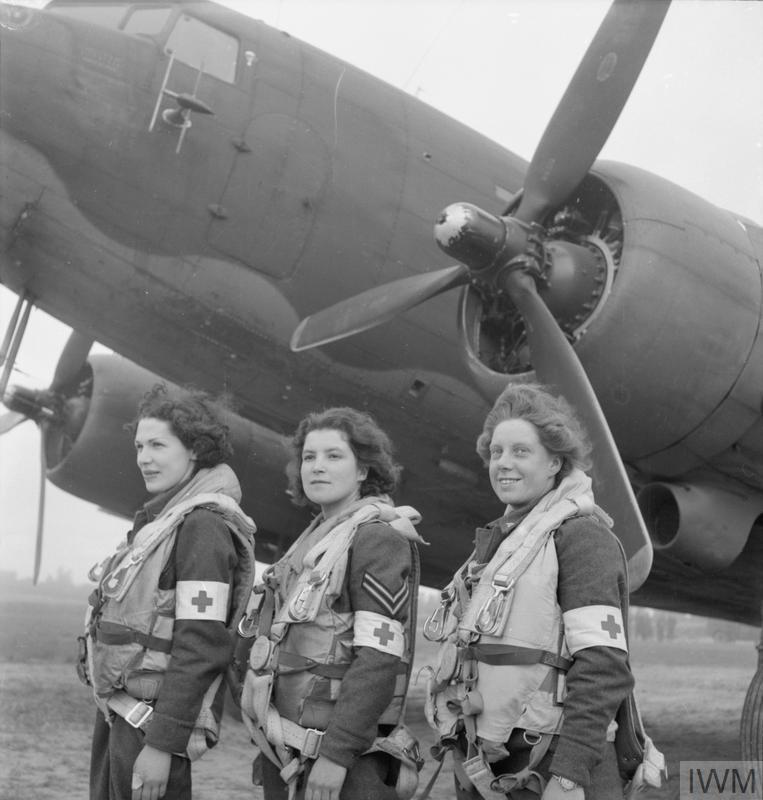
This was the first time the British government had authorised women to be flown into an active war zone. It was a potentially lethal mission. When the Dakotas finally returned safely, the three women were dubbed “the Flying Nightingales” by the newspaper correspondents who greeted them.

It wasn’t until 2008 that these brave women received recognition of the part they played by the Flying Nightingales with a Lifetime Achievement Statuette presented by Queen Camilla (as the Duchess of Cornwall). By this time there were only seven women of the approximately 500 alive to see this recognition.

Originally published in Life in Bromley magazine 

Share this: