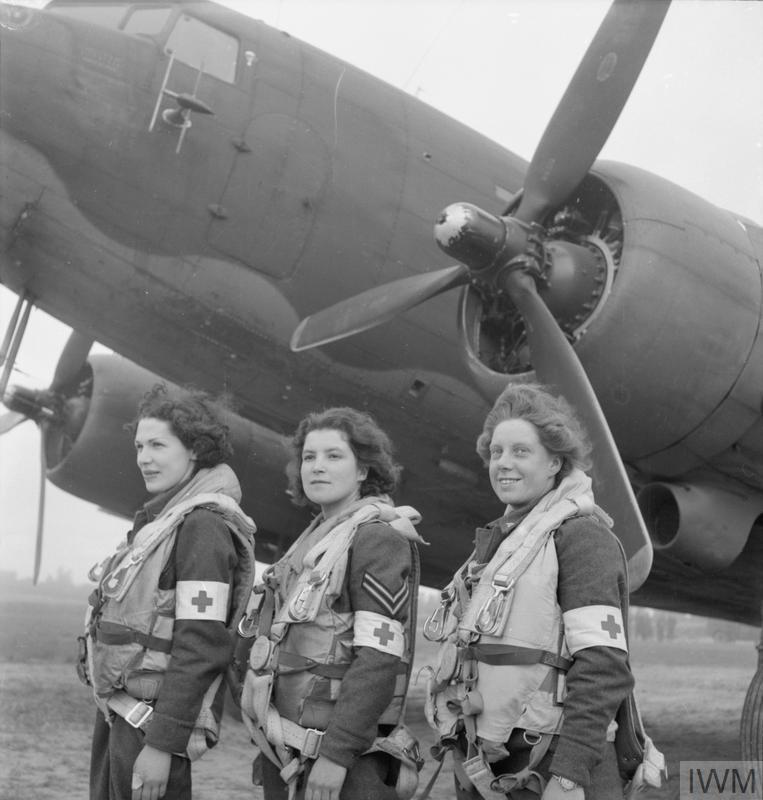
A week later, on the 13th June, three Dakota planes took off from an RAF base in Wiltshire and headed over the channel to France. There were three women on board– Corporal Lydia Alford, Leading Aircraft Women (LACW), Myra Roberts and Edna Birkbeck, members of the Women’s Auxiliary Air Force. They all had a nursing background. Their role was to care for the wounded men the returning planes would carry back to England. They had no protection from enemy planes. There was no Red Cross sign on the planes because, on the outward journey, the planes carried ammunition and rations to supply the Allied soldiers, fighting their way through Normandy. Every Flying Nightingale was issued with a parachute, but if a crash seemed likely when they were returning with casualties, they were forbidden they were forbidden from baling out. Their orders were to stay with the injured and the parachutes were locked away…